
This article is educational and summarizes published and publicly reported clinical research not medical advice.
Retatrutide Peptide Available in UAE on Elysium Peptides UAE
What is Retatrutide?
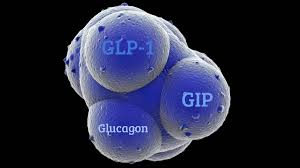
Retatrutide (also referred to as LY3437943 during clinical trials) is an injectable peptide designed to be administered weekly to treat obesity and associated cardiovascular/metabolic disorders. It is unique as a “triple hormone receptor agonist” or “Triple-G”, in that it stimulates all three of the following receptors;
– GLP-1 receptor (GLP-1R)
– GIP receptor (GIPR)
– Glucagon receptor (GCGR)
Most people know about the GLP-1 drugs (e.g., Semaglutide) and GLP-1/GIP dual agonists (e.g., Tirzepatide aka. Mounjaro). The researchers involved in this project believe that adding the glucagon-receptor (“the third lever”) will provide additional benefit in moving metabolism towards fat loss when combined with the GLP-1/GIP stimulation effect.
How does “triple agonism” work (in plain English, with the science intact)?
Consider weight regulation as a multi-dial system that includes; your desire to eat (appetite), how you feel after eating (fullness), how well you are able to regulate blood sugar levels (insulin) and how much energy you expend (energy). The advantage of Retatrutide is that it influences many of these dials simultaneously.
The simplified roles for the receptor pathways in the body are below (the real biology is far more complex however, this represents the main concepts):
– GLP-1R activation: generally decreases your hunger and increases your feeling of satiety while supporting normal glucose levels through increasing insulin secretion and slowing down gastric emptying.
– GIPR activation: supports the release of insulin when glucose levels rise and studies continue to examine its relationship to appetite and fat metabolism.
– GCGR activation (glucagon receptor): increases energy expenditure and has an effect on fat metabolism, but may elevate glucose levels — therefore by activating GLP-1/GIP receptors simultaneously, this provides the balance needed.
This “three-receptor design” is the science behind why retatrutide has generated interest; retatrutide is not “just” a more potent version of GLP-1, it is a new approach.
What does the best human evidence show so far?
1) Phase 2 obesity trial: large weight loss over 48 weeks
The study’s Phase 2 clinical trial was conducted with obese adult subjects (n=338) that included approximately 52% males.
Subjects in the study received either subcutaneous retatrutide once per week for 48 weeks or a placebo during the same period.
Least-squares mean weight changes at 24 weeks for each of the different doses of retatrutide as compared to the least-squares mean weight change from the placebo group:
Retatrutide (1mg): -7.2%
Retatrutide (4mg pooled): -12.9%
Retatrutide (8mg pooled): -17.3%
Retatrutide (12mg): -17.5%
Placebo: -1.6%
Least-squares mean weight changes at 48 weeks for each of the different doses of retatrutide as compared to the least-squares mean weight change from the placebo group:
Retatrutide (1mg): -8.7%
Retatrutide (4mg pooled): -17.1%
Retatrutide (8mg pooled): -22.8%
Retatrutide (12mg): -24.2%
Placebo: -2.1%
Percentage of subjects in each treatment group that met certain milestones at 48 weeks:
≥15% weight loss: 60% Retatrutide (4mg); 75% Retatrutide (8mg); 83% Retatrutide (12mg)
Placebo: 2%
As reported in the abstract of the study, gastrointestinal (GI) adverse effects were both the most common side effect of all adverse effects and they were dose-dependent; lowering the initial dose of retatrutide resulted in fewer GI adverse effects; and an increase in heart rate (dose dependent) peaked by 24 weeks and declined thereafter.
Phase 2 type 2 diabetes trial: HbA1c improvements + notable weight loss (published)
A phase 2 clinical trial of retatrutide compared to a placebo as well as an active control (dulaglutide) in patients with type 2 diabetes, examined both endpoints of interest as follows:
– Primary Endpoint: Change in Hemoglobin A1c at week 24
– Secondary Endpoint of interest: Weight loss at 36 weeks
Weight Loss at 36 weeks (Mean Percentage Change in weight):
– up to −16.94% (12mg escalation)
– vs −3.00% (placebo) and −2.02% (active control – dulaglutide)
The following safety information is noted by the abstract:
– Mild to moderate gastrointestinal adverse effects occurred frequently in the study population;
– No serious hypoglycemic episodes or deaths occurred during the study time frame.
Body composition: fat mass dropped substantially in a DXA substudy
The percent total fat mass reduction from baseline using DXA (the most common body composition imaging method) at Week 36:
−15.2% for the pooled 4 mg dose group
−26.1% for the pooled 8 mg dose group
−23.2% for the 12 mg dose group
compared with a −4.5% decrease in total fat mass for the placebo group and −2.6% for the dulaglutide group.
Important in this respect is the authors’ assertion that the proportion of lean mass loss to total weight loss observed in this study was comparable to that seen in most other studies examining treatment of obesity (and preserving lean mass is one of the major concerns with all methods of rapid weight loss).
The TRIUMPH Phase 3 program (overview)
In 2026, Lilly will publish a description of the trial program. It explains that TRIUMPH has four Phase 3 multi-center, randomized, double-blind trials to compare the effects of weekly subcutaneous retatrutide against those of placebo, plus diet and activity, in over 5,800 participants.
The organization of the trials is as follows:
– TRIUMPH‑1 and TRIUMPH‑2: “weight management baskets” for two separate trials; each trial has an obstructive sleep apnea (OSA) protocol nested within its weight management protocol and an osteoarthritis (OA) protocol nested within its weight management protocol;
– TRIUMPH‑3: weight management in a population with cardiovascular disease (CVD);
– TRIUMPH‑4: a standalone trial for weight management in a knee OA population.
Primary end points (what the trials were designed to measure) include:
– Change in % body weight (weight management)
– AHI (Apnea-Hypopnea Index) (change in number of breathing interruptions per hour of sleep) (Obstructive Sleep Apnea)
– WOMAC (Western Ontario and McMaster Universities Osteoarthritis Index) Pain (change in a validated osteoarthritis questionnaire) (Knee OA).
In easy terms Lilly is asking with the Phase 3 program
Lilly is not just asking if it reduces weight. The Phase 3 program is also asking: Does weight loss (and the biological mechanisms that underlie it), result in clinically significant improvement in major obesity-related complications such as obstructive sleep apnea, joint pain and cardiovascular disease risk.
Phase 3 results we do have so far: TRIUMPH‑4 (topline announcement)
On December 11, 2025, Lilly announced positive topline results for TRIUMPH‑4, a 68‑week trial in adults with obesity/overweight and knee osteoarthritis (without diabetes).
Trial Overview:
In this trial conducted on adults with knee osteoarthritis (OA) and obesity/being overweight without diabetes, retatrutide resulted in statistically significant reductions in body weight and improvements in knee pain compared to placebo at 68 weeks.
Number of Participants:
445 participants who were randomized 1:1:1 to receive either retatrutide 9mg, retatrutide 12mg or a placebo.
Co-primary Endpoints:
Percent change in body weight
Change in WOMAC pain score
Both of these end points will be measured from baseline to week 68.
Efficacy Estimands (Reported Efficacy)
Body Weight:
-26.4% (retatrutide 9 mg)
-28.7% (retatrutide 12 mg)
vs -2.1% (placebo)
WOMAC Pain Subscale (knee pain):
-4.5 (retatrutide 9 mg)
-4.4 (retatrutide 12 mg)
vs -2.4 (placebo)
WOMAC Function Subscale (physical function):
Substantially improved compared to placebo
Weight-Loss “Milestones” Reported (Efficacy Estimands)
≥35% weight loss achieved: 18.2% (retatrutide 9 mg), 23.7% (retatrutide 12 mg), 0.0% (placebo)
Adverse Events in TRIUMPH-4 (Topline)
Common Adverse Events Were Gastrointestinal Related and More Frequent Than Placebo Including:
Nausea (38.1%, 43.2% for 9 mg & 12 mg vs 10.7% placebo)
Diarrhea (34.7%, 33.1% vs 13.4%)
Constipation (21.8%, 25.0% vs 8.7%)
Vomiting (20.4%, 20.9% vs 0.0%)
Other Non-GI Event Reported: Dysesthesia Occurred In 8.8% (9 mg) And 20.9% (12 mg) Vs 0.7% Placebo; Most Were Mild, Rarely Led To Discontinuation (According To The Announcement).
Discontinuations Due To Adverse Events: 12.2% (9 mg) and 18.2% (12 mg) vs 4.0% Placebo.
You Will See Two Sets Of Numbers: “Efficacy Estimand” vs “Treatment-Regimen Estimand”
The Topline Release Reports Both:
– Efficacy Estimand: Closely Relates To “What Happens If People Take The Treatment As Intended”
– Treatment-Regimen Estimand: More Closely Relates To “What Happens In Practice When You Include Discontinuations And Other Real-World Factors”
Example: The Treatment-Regimen Estimand Weight Changes Reported Were:
-20.0% (9 mg) and -23.7% (12 mg) vs -4.6% (placebo)
Conclusion: This Is Normal For “Real-World Like” Estimates To Look Smaller Than “On-Treatment” Estimates – Especially When Side Effects Cause Some People To Stop Early.
Phase 3 Results Expected Next Year.
Lilly Stated That Additional Phase 3 Results Are Expected In 2026 And That TRIUMPH Is Evaluating Retatrutide Across Obesity And Complications, Including Sleep Apnea And Other Outcomes.
A simple glossary of trial terms you’ll see
- BMI: Body mass index (a screening metric based on height/weight).
- HbA1c: Average blood sugar marker over ~2–3 months (used in diabetes studies).
- AHI: Apnea‑Hypopnea Index = breathing interruptions per hour of sleep (sleep apnea severity).
- WOMAC: A validated osteoarthritis questionnaire used to quantify pain and function.
- Least‑squares mean: A statistics‑adjusted average (helps account for baseline differences).
- Topline results: A high‑level summary, often via press release, before full peer‑reviewed publication.
The takeaway
The investigational drug retatrutide is an advanced third generation of drugs which can target three different receptors for the purpose of treating obesity has produced very significant weight loss results in its second phase of testing, as well as encouraging preliminary results in the first Phase 3 trial announced plus other clinical trials have also shown that patients treated with this compound may experience less severe symptoms from secondary problems such as knee osteoarthritis pain, and that there are possible positive changes associated with Type 2 Diabetes and Fatty Liver Disease Biomarkers, while at the same time the drug has no current approval status, and the drug does produce adverse reactions (especially gastrointestinal), and is subject to many federal regulations (such as being prohibited by the FDA to be compounded).
Direct links to the key scientific sources
Phase 2 obesity trial (PubMed)
https://pubmed.ncbi.nlm.nih.gov/37366315/
Phase 2 type 2 diabetes trial (PubMed)
https://pubmed.ncbi.nlm.nih.gov/37385280/
Body composition DXA substudy (PubMed)
https://pubmed.ncbi.nlm.nih.gov/40609566/
MASLD / liver fat Phase 2a trial (free full text on PMC)
https://pmc.ncbi.nlm.nih.gov/articles/PMC11271400/
TRIUMPH Phase 3 program design overview (PubMed)
https://pubmed.ncbi.nlm.nih.gov/41090431/
TRIUMPH-4 Phase 3 topline press release (Dec 11, 2025)
https://www.prnewswire.com/news-releases/lillys-triple-agonist-retatrutide-delivered-weight-loss-of-up-to-an-average-of-71-2-lbs-along-with-substantial-relief-from-osteoarthritis-pain-in-first-successful-phase-3-trial-302638804.html
FDA: Concerns with unapproved GLP-1 drugs used for weight loss (includes retatrutide)
https://www.fda.gov/drugs/postmarket-drug-safety-information-patients-and-providers/fdas-concerns-unapproved-glp-1-drugs-used-weight-loss
FDA warning letter example referencing compounded retatrutide (Sep 2025)
https://www.fda.gov/inspections-compliance-enforcement-and-criminal-investigations/warning-letters/glp-1-solution-09092025

All rights reserved Elysium Peptides 2026


