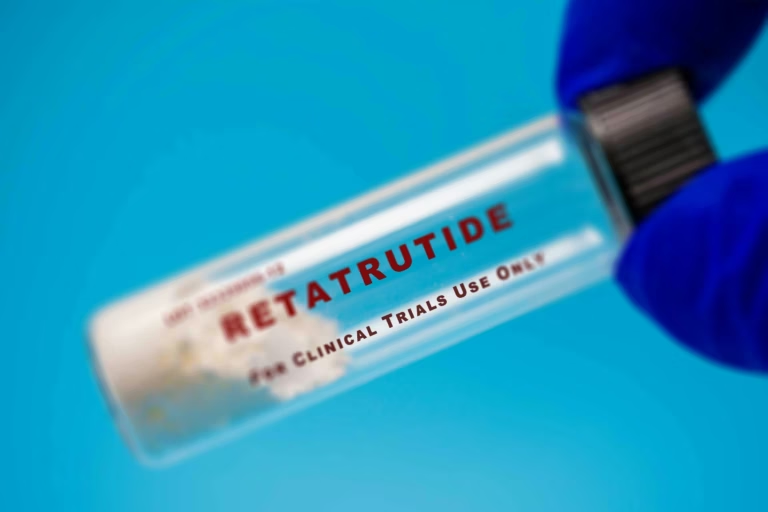
Context before we begin: PT-141 is an older name used by researchers to refer to Bremelanotide, a synthetic cyclic heptapeptide melanocortin receptor agonist. The first and currently only U.S. FDA-approved peptide using this active ingredient is the as-needed subcutaneously administered (under the skin via an injector pen) medication called Vyleesi (bremelanotide injection) for premenopausal women who have been diagnosed with acquired, generalized hypoactive sexual desire disorder (HSDD). Also available on Elysium Peptides UAE.
Below is an explanation of how this peptide works based on what has been proven through clinical trials and other evidence-based data sources which can be linked to all references cited.
1) What PT‑141 is – and what makes it different from “Viagra‑type” medications?
Thinking about it in simple terms
– The primary function of PDE5 inhibitors (sildenafil/tadalafil) is to assist in the delivery of blood to the penis at time of sexual stimulation.
– Bremelanotide (PT–141) has a more direct relationship to the “desire/interest” portion of the brain’s sexual arousal circuitry. This peptide is often said to turn up the “brain interest/arousal signal”, thus supporting sexual response via an indirect route.
The science behind this
Bremelanotide acts as a melanocortin receptor (MCR) agonist. Melanocortins activate various MCR subtypes as follows: MC1R > MC4R > MC3R > MC5R > MC2R. At therapeutic levels, activation of MC1R and MC4R are thought to be the most clinically relevant.
– MC4R is found throughout the CNS*(Central Nervous System) and is associated with sexual motivation and arousal.
– MC1R is the type of melanocortin receptor that is found on melanocytes (cells responsible for producing pigment). Therefore, when MC1R receptors are activated, it results in an increase in pigmentation which explains the labeling of potential hyper-pigmentation with higher frequency dosing.
2) What the best human evidence says (Women)
In terms of approved uses, the drug Vyleesi is used to treat Hypoactive Sexual Desire Disorder (HSDD) in premenopausal women.
According to the FDA, women should be diagnosed with acquired, generalized HSDD – meaning they experience low sexual desire which creates distress and cannot be attributed to any other psychiatric/medical condition, relationship issues, or due to medications/substances.
Pivotal Phase 3 Trials (RECONNECT)
The FDA approval label describes two Pivotal Phase 3 trials (Study 1 & Study 2; ClinicalTrials.gov NCT02333071 and NCT02338960) that were completed to support the indication for Vyleesi. Each trial included women who administered the subcutaneous bremelanotide dose of 1.75 mg on an “as-needed” basis, approximately 45 minutes prior to planned sexual activity.
Improvements over Placebo:
– The co-primary endpoints that demonstrated improvement over placebo in both clinical trials include sexual desire (FSFI Desire Domain) and distress regarding lack of sexual desire (FSDS-DAO Question 13).
– In each clinical trial, the statistical significance (p-value) demonstrated a larger change from Baseline in both domains when receiving Vyleesi compared to placebo.
– An important item often left out of online summaries:
– There were no significant differences between groups regarding the number of satisfying sexual events (SSEs), a secondary endpoint, in the 2 Phase 3 trials.
Extension Trial (52 Weeks)
Women who participated in the long-term, open-label extension of this study, demonstrating sustained benefits of treatment and no additional safety concerns throughout the 52-week duration of the extension study.
Brain-Mechanism Study (fMRI)
A double-blind, randomized, crossover fMRI study of women with HSDD demonstrated that MC4R activation increased sexual desire for at least 24 hours and altered brain response to erotic stimuli in a manner consistent with decreased self-conscious (“top-down”) inhibition and increased sexual processing.
These data support the concept that the primary mechanism of action of PT-141 is central (brain-based) rather than peripheral (genital blood flow).
3) What the evidence says (Men): Erection support and arousal.
Bremelanotide/ PT-141 has been studied primarily in males as part of early clinical trials but is not yet approved by the FDA for use in males.
Intranasally administered PT-141 in healthy males and in males with mild-to-moderate ED.
A double-blind, placebo-controlled clinical trial evaluating intranasally administered PT-141 was conducted with results showing statistically significant improvement in erectile response when dosages were greater than 7mg.
The first erections occurred approximately thirty minutes post-administration.
Common side effects of intranasally administered PT-141 include facial flushing and nausea.
Subcutaneously administered PT-141 in men who demonstrated poor response to sildenafil.
Clinical studies have shown that subcutaneously administered PT-141 can produce significant improvements in erectile function among men diagnosed with ED who had previously failed to respond to Viagra/ Cialis, therefore, a possible alternative to the mechanism of action for PDE5 inhibitors exists.
Evidence of “add-on” effect with sildenafil.
When administered concurrently with sildenafil, intranasally administered PT-141 has resulted in improved erectile response over that achieved using sildenafil alone.
Implications for real-world readers:
These data suggest that PT-141 could provide a central arousal/erection signal above the peripheral blood-flow enhancement provided by PDE5 inhibitors again, however, this represents an investigational and off-label area for male treatment, which requires physician oversight.
4) Timing and “best use window” for sexual performance and desire
A) Injector Pen (Elysium Peptides UAE PT-141 subcutaneous injection) – Timing for Evidence-Based Use
Timing Recommendations:
* Inject 1.75mg subcutaneously (abdomen or thigh) as needed, at least 45 minutes prior to expected sexual activity.
* Only administer one dose per 24 hours; administration of more than 8 doses per month is not recommended.
The pharmacokinetics of PT-141 that support these recommendations include:
* Median Tmax of approximately 1-hour post-subcutaneous administration (range 0.5-1.0h).
* Terminal half-life of approximately 2.7 hours.
* Approximately 100% bioavailability post-subcutaneous administration.
Best Window of Administration (Consistent With Label & Pharmacokinetic Data):
* First few uses, most users should aim for the time frame of 45-90 minutes prior to sexual activity due to the peak concentration of the drug around 1-hour post-administration, and the clinical trials provided similar instruction to wait ~45 minutes prior to sexual activity.
* Users who experience adverse events may want to complete a “dry-run” by administering the medication on a non-critical day prior to an important event in order to assess their body’s response to the medication, especially in regards to nausea and flushing.
B) Nasal Spray (Intranasal PT-141) – What Trials Did, Why Be Cautious
Important Cautionary Statement: Intranasal bremelanotide / PT-141 is not an FDA-approved product in the United States, and formulations of nasal sprays available outside of formal clinical trials can result in highly variable concentrations delivered and absorbed into the bloodstream.
Although clinical trials were conducted with intranasal PT-141, the following data provides a general understanding of the time of onset:
* The median time-to-first erection was reported to occur in approximately 30-minutes post-intranasal PT-141 administration in a controlled trial.
* The current Vyleesi Prescribing Information discusses safety data from a study using intranasal PT-141 (20-mg dose), which resulted in a mean Cmax approximately 2.5 times greater than that produced by the approved 1.75-mg subcutaneous Vyleesi dose, indicating that the intranasal formulation may produce significantly higher exposures (and therefore potential adverse reactions) compared to the subcutaneous formulation, depending on the dose and formulation used.
General Takeaway Regarding Onset Time of Effects Using Intranasal Dosing (Based Upon Clinical Trial Data):
* Men’s clinical trials indicate that the effects of PT-141 may commence approximately 30-minutes post-dosing, and assessment of these effects may continue for several hours.
* Due to the lack of standardization in intranasal products and the potential for significantly increased exposures (and therefore adverse reactions), users should approach any claimed timing estimates as only approximate, and refrain from self-experimentation without a clinician (particularly those with cardiovascular/blood pressure-related risk factors).
5) Side effects and safety: what you should know before considering PT‑141
Side Effects – Prescribing Information (March 2024):
Nausea:
• Incidence 40.0 % vs 1.3 % (placebo)
• Median time to onset: approximately 1 hour after administration
• Average duration: approximately 2 hours
• Patient discontinuation due to side effect: 8%
• Side effect management with anti-emetics: 13%
Flushing:
• Incidence: 20.3 % vs 0.3 %
Injection Site Reactions:
• Incidence: 13.2 % vs 8.4 %
Headaches:
• Incidence: 11.3 % vs 1.9 %
Vomiting:
• Incidence: 4.8 % vs 0.2 %
Cardiovascular/Blood Pressure Precautions:
Transitory increases in blood pressure and decreases in heart rate occur after each PT-141/ Vyro Pen administration:
• Maximum Blood Pressure Increase (systolic/diastolic): 6 mmHg / 3 mmHg
• Heart Rate Decrease: up to 5 beats per minute
• Blood pressure and heart rate usually return to normal within 12 hours
Uncontrolled Hypertension or Cardiovascular Disease Contraindications: PT-141/ Vyro Pen has been associated with transitory increases in blood pressure and decreases in heart rate.
Risk of Hyperpigmentation:
Focal Hyper-Pigmentation:
• Phase 3 Trial: Incidence 1% (patients receiving less than 8 doses/month)
• Daily Dosing for 8 Days: Focal Hyper-Pigmentation Development: 38%
• Causes of Hyper-Pigmentation: Skin/Gingiva/Breasts
• Resolution: Not Confirmed in All Patients After Stopping Administration
Due to this risk, the manufacturer recommends against frequent dosing.
Drug Interactions:
PT-141 may slow gastric emptying, and could therefore lower the rate/extent of absorption of oral drugs:
• Avoid using PT-141 with oral medications dependent on a threshold concentration for efficacy.
• Avoid using PT-141 with oral naltrexone used for addiction treatment.
6) “Ancillary” applications and secondary effects (what is plausible vs proven)
A) Effects on Appetite/Satiety (Secondary; Not an Approved Benefit)
PT-141 has been shown to affect appetite regulation via its action on MC4R receptors. The fMRI study in women with HSDD showed an increase in feeling full or satiety, and a decrease in eating following administration of PT-141 during one of the scanning periods.
Important: PT-141 is NOT intended for use as a weight loss drug; PT-141 simply illustrates that the melanocortin system interacts with pathways involved in appetite, and therefore some individuals may experience decreased appetite (or nausea) at the time they take PT-141.
B) Male Erectile Dysfunction (ED) as a Therapeutic Area (Investigational)
The studies involving humans demonstrate that PT-141 will induce erection and help many men – sometimes when PDE5 inhibitors fail – through a mechanism other than PDE5 inhibition.
However, there is no FDA-approved indication for the treatment of male erectile dysfunction; as such, the risk/benefit analysis is significantly different from the female population due to the blood pressure effects.
C) PT–141 is Unlikely to Do:
– It is not a testosterone booster; it functions through activation of melanocortin receptors and subsequent neural transmission; it does not work to elevate sex hormone levels.
– It is not reliably an “instant aphrodisiac” for every individual; while statistically significant, clinically relevant effects occur on average to a relatively small degree; sexual desire involves multiple factors.
7) Peptide “stacking” to intensify PT‑141:
For Men
PT-141 (Bremelanotide) is primarily used to boost sexual desire and improve erectile function by activating melanocortin receptors in the brain, leading to increased arousal, libido, and erection quality. To intensify these effects, it can be stacked with other peptides that target hormonal pathways, neurological function, or overall vitality. Common stacks focus on enhancing testosterone production, dopamine release, and sexual response. Note that dosing and administration (typically subcutaneous injections) should be tailored individually, and effects may vary. Here are some possible peptide stacks based on available information:
- PT-141 + Kisspeptin: This combination targets both brain-based arousal (via PT-141) and hormonal signaling (via Kisspeptin, which stimulates GnRH release, boosting LH, FSH, and testosterone levels). It can lead to stronger erections, heightened libido, and improved response to sexual stimuli. Kisspeptin enhances neurological pathways for attraction and arousal, amplifying PT-141’s effects on desire and performance. Typical use: PT-141 at 1.75mg as needed (45-60 minutes before activity), stacked with Kisspeptin injections.
- PT-141 + Gonadorelin: Gonadorelin acts as a GnRH analog to stimulate LH production, supporting testosterone and libido, especially in cases of hormonal decline. When stacked with PT-141, it provides hormonal backup to brain-driven desire, potentially leading to more consistent erections and sexual motivation. This is particularly noted for men over 35 with stress-related or age-related libido issues. Protocol example: PT-141 1.75mg SQ as needed, combined with Gonadorelin for ongoing hormonal support.
- PT-141 + Oxytocin: Oxytocin enhances emotional bonding, orgasm intensity, and genital sensitivity, complementing PT-141’s arousal effects. The stack can intensify overall sexual satisfaction, desire, and erection reliability by improving neurological and emotional aspects of intimacy. It’s often used for functional enhancement in sexual wellness. Administration: Both via injection, with Oxytocin dosed around activity for synergy.
Other potential additions include NAD+ for energy and mood support to indirectly boost PT-141’s effects, or growth hormone-releasing peptides like Ipamorelin/CJC-1295 for vitality, though direct stacking evidence is limited.
For Women
PT-141 is FDA-approved for hypoactive sexual desire disorder (HSDD) in premenopausal women and works by stimulating brain receptors to increase desire, arousal, and lubrication without relying on hormonal changes. Stacks aim to amplify these by addressing neurological, hormonal, or emotional factors. Effects often include heightened sexual thoughts, better arousal response, and improved intimacy satisfaction. As with men, individual dosing via injections or nasal spray is key.
- PT-141 + Kisspeptin: Kisspeptin boosts sex drive by increasing LH/FSH and sexual steroid release, enhancing brain activity related to attraction and arousal. Combined with PT-141, it can intensify desire, lubrication, and overall libido, making it effective for women in perimenopause, postpartum, or with stress-induced low desire. Use: PT-141 1.75mg as needed, paired with Kisspeptin for hormonal amplification.
- PT-141 + Gonadorelin: This stack supports libido through Gonadorelin’s stimulation of natural hormone production (LH/FSH), which can counteract declines from menopause, GLP-1 treatments, or high stress. It enhances PT-141’s central arousal mechanism, leading to more spontaneous desire and better physical response. Example: PT-141 pre-activity, with Gonadorelin for baseline support.
- PT-141 + Oxytocin: Oxytocin promotes bonding and heightens orgasmic response, synergizing with PT-141 to boost emotional and physical arousal. This can lead to greater sexual confidence, desire, and satisfaction, especially in relational contexts. Dosing: Injections timed around intimacy for optimal effects.
Stacks may also incorporate NAD+ for mood and energy to support sustained desire. These combinations are generally brain- and hormone-focused, avoiding vascular dependencies.
All Peptides Available on Elysium Peptides UAE
8) Citations
Vyleesi (bremelanotide) Full Prescribing Information (Revised 03/2024):
https://vyleesi.com/docs/Vyleesi-Full-Prescribing-Information.pdf
Phase 3 RECONNECT trials (Kingsberg et al., 2019; Obstetrics & Gynecology) – full text (PMC):
https://pmc.ncbi.nlm.nih.gov/articles/PMC6819021/
PubMed record:
https://pubmed.ncbi.nlm.nih.gov/31599840/
52-week open-label extension (Simon et al., 2019) – full text (PMC):
https://pmc.ncbi.nlm.nih.gov/articles/PMC6819023/
Mechanism / sexual brain processing (Thurston et al., J Clin Invest, 2022):
https://www.jci.org/articles/view/152341
Intranasal PT-141 in men (Diamond et al., Int J Impot Res, 2004):
https://pubmed.ncbi.nlm.nih.gov/14963471/
Subcutaneous PT-141 in men with poor sildenafil response (Rosen et al., Int J Impot Res, 2004):
https://pubmed.ncbi.nlm.nih.gov/14999221/
Intranasal bremelanotide in women with sexual arousal disorder (Diamond et al., J Sex Med, 2006):
https://pubmed.ncbi.nlm.nih.gov/16839319/
Dose-finding trial in premenopausal women with female sexual dysfunction (Clayton et al., 2016) – full text (PMC):
https://pmc.ncbi.nlm.nih.gov/articles/PMC5384512/
Mechanistic review (Pfaus et al., 2022; CNS Spectrums):
https://www.cambridge.org/core/journals/cns-spectrums/article/neurobiology-of-bremelanotide-for-the-treatment-of-hypoactive-sexual-desire-disorder-in-premenopausal-women/CB2718A94BC8F52E562867A0F1689B15

All rights reserved Elysium Peptides 2026